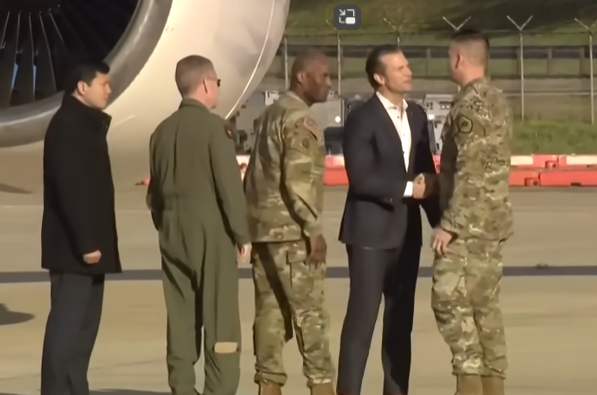
Overview of Pete Hegseth’s Visit to the DMZ
On a significant day marked by geopolitical observations, Defense Secretary Pete Hegseth visited the Demilitarized Zone (DMZ) separating North and South Korea. His visit, which took place amid ongoing concerns regarding the stability of the Korean Peninsula, underscores the United States’ commitment to its ally, South Korea. The timing of this visit was crucial, given the increased tensions observed in the region, making Hegseth’s presence a diplomatic gesture aimed at reinforcing U.S.-South Korea relations.
Traveling via a U.S. Army helicopter, Hegseth’s journey to the DMZ was emblematic of military readiness and support. The helicopter transfer facilitated a secure and swift approach to the site, which has historically been a focal point in matters of confrontation and peace in the Korean context. Upon arrival, Hegseth engaged in high-level discussions with pivotal figures, including South Korean Defense Minister Ahn Gyu-back. These meetings are vital for establishing a unified approach to security in a region fraught with challenges.
The background of the visit highlights the long-standing partnership between the United States and South Korea, particularly in confronting threats posed by North Korea. Hegseth’s engagement at the DMZ reflects an ongoing effort to enhance cooperation in defense strategies. The U.S. aims to fortify the deterrence against hostile actions from the North while reassuring allies of their steadfast support. This visit not only serves as a testament to U.S. military presence but also acts as a crucial platform for dialogue on security issues affecting both nations.
This strategic visit by Defense Secretary Pete Hegseth thus marks a new chapter for U.S. troops in South Korea, indicating that the United States remains actively involved and committed to stability in the region.
The Importance of the DMZ in U.S. Military Strategy
The Korean Demilitarized Zone (DMZ) serves as a critical element in the regional military strategy of the United States, symbolizing the enduring commitment to deterring aggression and maintaining peace on the Korean Peninsula. Established in the aftermath of the Korean War, the DMZ has not only acted as a buffer zone but has also become a frontline in the ongoing geopolitical tensions involving North Korea. Historically, U.S. troops stationed in South Korea have played a pivotal role in ensuring stability and security, with their presence serving as a deterrent against possible incursions by North Korean forces.
The strategic significance of the DMZ extends beyond its physical presence; it represents a broader framework within U.S. military strategy in Asia. With North Korea’s nuclear ambitions posing a persistent threat, the readiness of U.S. military personnel in South Korea is paramount. They participate in joint exercises, share intelligence, and maintain a high level of preparedness to respond to any threats, thus assuring both allies and adversaries of America’s unwavering commitment to regional security.
Furthermore, the recent visit by Pete Hegseth to the DMZ highlights the United States’ support for South Korea in the face of increasing provocations from the North. His presence at this symbolic site reinforces the notion that U.S. military engagement in the region is not only about deterrence but also about fostering partnerships that transcend military alliances, embodying shared democratic values and security interests. As the geopolitical landscape continues to evolve, the importance of the DMZ in U.S. military strategy will remain a focal point in the discourse regarding peace and stability in Northeast Asia, emphasizing the necessity for ongoing vigilance and cooperation.
Key Discussions and Goals for Reshaping U.S. Troop Presence
The strategic visit by Pete Hegseth to the Demilitarized Zone (DMZ) marks a pivotal moment in discussions surrounding the reshaping of the U.S. troop presence in South Korea. Central to these negotiations are troop deployment strategies, which aim to enhance operational effectiveness while adapting to evolving regional security threats. It is increasingly necessary for U.S. military forces to align their operational posture with the strategic needs of both U.S. interests and those of South Korea.
One of the critical aspects of these discussions involves burden-sharing agreements with South Korean forces. As the geopolitical landscape continues to shift, Washington seeks to foster a more equitable partnership that not only bolsters South Korea’s defense capabilities but also ensures that U.S. resources are utilized most effectively. This includes assessing the rationale for the current troop levels, potential restructuring of forces, and making adjustments based on both geopolitical assessments and the input from Seoul. Enhancing collaboration in military readiness and joint exercises could serve to strengthen the defense posture of both nations, providing a unified front against potential regional adversaries.
Another focal point of these discussions is the broader vision for future military collaboration between the U.S. and South Korea. The strategic partnership must transcend mere troop levels; it should incorporate advanced technology integration, intelligence-sharing mechanisms, and strategic planning for potential contingencies. This holistic approach ensures that the U.S. troop presence not only addresses immediate security challenges but also prepares for future uncertainties in the Asia-Pacific region. Ultimately, the implications of these discussions extend beyond the bilateral relationship, influencing regional security dynamics and U.S. foreign policy. A reshaped U.S. troop presence could serve as a significant element in safeguarding peace and stability in a complex geopolitical environment.
Reactions and Implications of the Visit
The recent visit by Pete Hegseth to the Demilitarized Zone (DMZ) has drawn a variety of responses from key stakeholders, including the South Korean government, military analysts, and representatives from North Korea. The South Korean administration has emphasized the significance of this visit, viewing it as a reaffirmation of the United States’ commitment to regional security. Officials have highlighted the need for continued cooperation with U.S. forces stationed in South Korea, particularly in light of ongoing security challenges posed by North Korea’s missile tests and military provocations.
Military analysts have recognized the implications of Hegseth’s discussions concerning U.S. troop presence and readiness in the region. They argue that such visits can serve as vital touchpoints for bolstering morale among U.S. troops and demonstrating American resolve to its allies. The positive reception of this visit reflects a broader strategic narrative aimed at strengthening U.S.-South Korean ties and deterring aggression from the North. Analysts suggest increased military collaboration between the United States and South Korea may emerge as a response to North Korea’s unpredictable behavior.
On the North Korean front, the government’s reaction has been predictably cautious. Media outlets have portrayed Hegseth’s visit as a provocative gesture, reiterating the nation’s disdain for perceived threats to its sovereignty. North Korean officials may interpret these actions as part of a larger scheme employed by the U.S. to maintain pressure on their regime. However, this visit could also be seen as an opportunity for diplomacy, with implications for future negotiations, should North Korea choose to engage constructively.
The broader geopolitical landscape in East Asia may shift as a result of this engagement. Strengthened U.S.-South Korean relations will likely continue to influence strategic calculations in the region. Furthermore, effective diplomatic dialogue is essential for managing tensions and pursuing sustainable peace, especially amid the dynamic interplay of interests from both regional and global powers. Thus, Hegseth’s visit marks a pivotal moment in the ongoing efforts to navigate these complexities.

The PakSoil News Team is a dedicated group of journalists, editors, and analysts committed to delivering accurate, timely, and balanced news coverage. From politics and business to culture and community, we bring you stories that matter — verified, unbiased, and written with integrity.