The Announcement of Airspace Closure
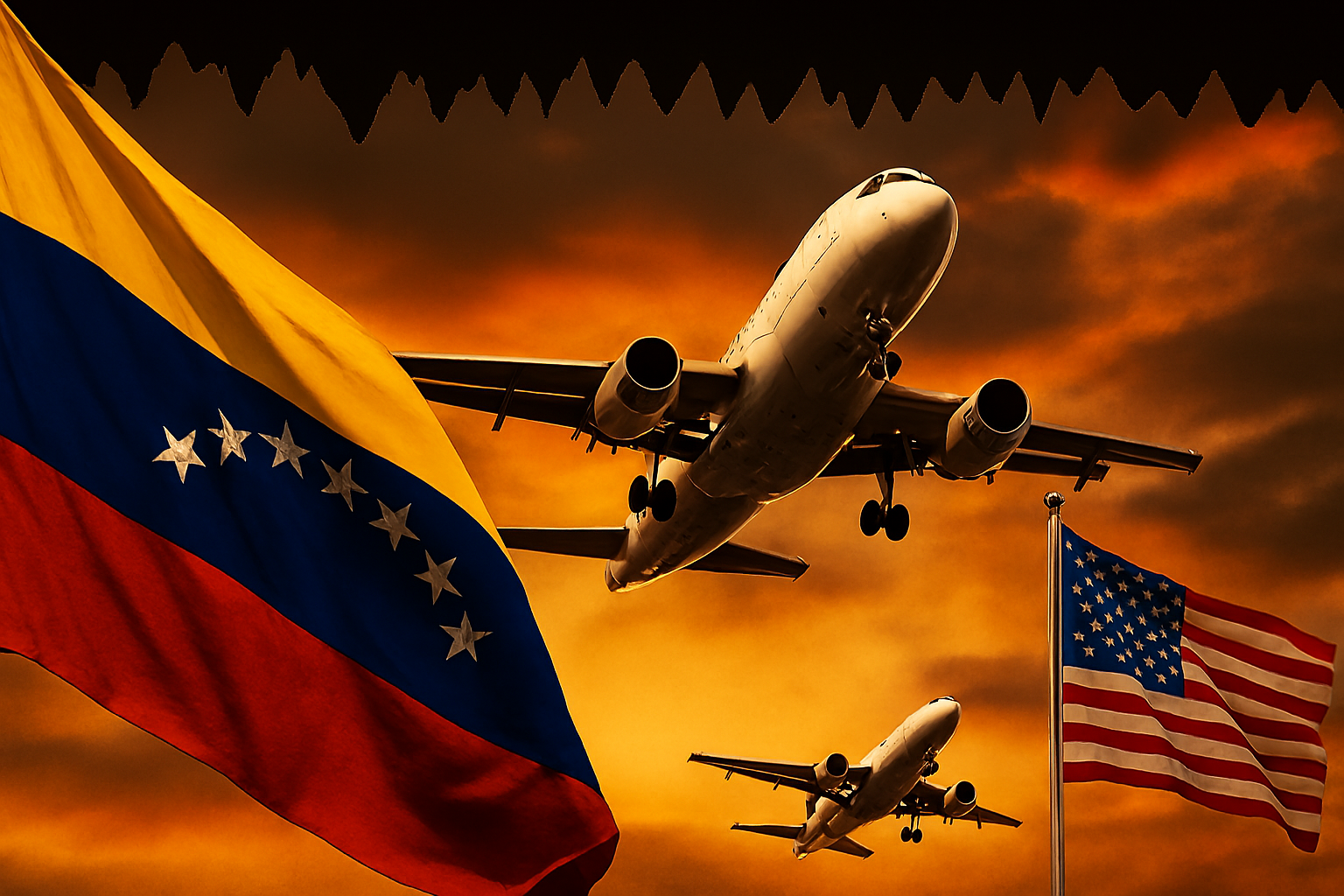
On a recent date, President Donald Trump took to social media to announce a significant declaration regarding Venezuelan airspace. In his post, he articulated that “Venezuelan airspace is officially closed” as part of a broader strategy to combat escalating drug trafficking and human trafficking operations that have been rampant in the region. This decision, emerging amidst ongoing tensions with Venezuelan President Nicolás Maduro, marks a critical point in the U.S. administration’s efforts to address the growing concerns surrounding these illicit activities.
The wording of Trump’s announcement was direct and assertive, emphasizing a zero-tolerance policy towards the drug trade that has increasingly threatened U.S. national security. By affirming that the airspace is closed, the President effectively sent a clear message that the United States is willing to take drastic measures in response to the serious violations and threats posed by Venezuelan factions involved in drug trafficking. The implications of this decision are multifaceted, potentially affecting not only U.S.-Venezuela relations but also international drug trade routes that operate in and out of the region.
This declaration comes at a time when the U.S. government has engaged in a series of discussions with Maduro, although the dialogue has not yielded fruitful outcomes. The administration’s current stance highlights an escalating confrontation as it seeks to dismantle the operational capacities of criminal networks leveraging Venezuelan waters for their activities. With concerns about human trafficking intertwined with the drug trade, the urgency and gravity of the situation are underscored. Trump’s announcement thus signifies a pivotal moment in the fight against drug trafficking, marking an escalation in both rhetoric and policy aimed at destabilizing the networks that exploit Venezuela’s geographic and political conditions.
Impact on Airlines and International Flights
The recent declaration by President Trump regarding the closure of Venezuelan airspace amid escalating drug-related violence has profound implications for airlines and international flight operations. As safety concerns intensify, multiple airlines have already begun to reassess their flight routes and schedules. Several foreign carriers had previously suspended services to Venezuela in response to security warnings, reflecting the broader impact of political instability and crime in the region.
Currently, the announcement is likely to lead to further cancellations and alterations in international flight schedules to and from Venezuela. Airlines are expected to prioritize passenger safety, which may result in reduced connectivity and availability of direct flights. This adjustment poses challenges not only for travel logistics but also for travelers who rely on uninterrupted service for business or personal reasons.
The absence of direct flights between the U.S. and Venezuela significantly influences travel patterns. Travelers may be compelled to seek alternative routes, potentially leading to increased stopovers in neighboring countries. Such changes could make travel to Venezuela more time-consuming and expensive, thereby discouraging travel to the region. Airlines may also need to reconsider their operational strategies, reallocating aircraft and crews to other markets where demand remains stable or increasing.
Travelers looking to visit Venezuela, whether for tourism or familial reasons, will face a more complex journey, with fewer options available. Consequently, this ongoing situation may deter prospective visitors from making plans to travel to Venezuela. Understanding these dynamics is crucial for airlines as they navigate the challenges posed by this evolving scenario, balancing safety measures with the need to maintain service continuity in a competitive global aviation environment.
Military Presence and Strategy in the Caribbean
The Caribbean region has become a focal point for U.S. military operations, particularly in light of escalating concerns surrounding drug trafficking and political instability associated with the Maduro regime in Venezuela. The recent declaration by the Trump administration to close Venezuelan airspace has further underscored the need for a robust U.S. military presence in the area. The strategic goals of this military buildup are twofold: to combat the rampant drug smuggling activities that threaten regional security and to exert increased pressure on the Maduro government, which the U.S. views as an impediment to democracy and stability in the region.
Historically, U.S. military operations in the Caribbean have involved a combination of surveillance, interdiction efforts, and partnership with regional allies to tackle narcotics trafficking, which has significant implications for both U.S. domestic policy and international relations. Recent data highlights a surge in boat strikes against drug cartel operations, with U.S. naval forces engaging in coordinated missions to intercept smuggling routes that often funnel illicit substances into North America.
The consequences of these operations have been twofold: on one hand, they have achieved noteworthy successes in disrupting drug shipments, while on the other, they have heightened tensions with Venezuelan authorities. As U.S. naval and air assets increase their presence in the Caribbean, the likelihood of confrontations arising from intercepted operations is a growing concern. Furthermore, the deployment of military resources also serves as a strategic signal to the Maduro regime, indicating that the United States remains committed to its objectives of promoting stability and countering the influence of illicit activities in this geopolitically critical region.
Through these military strategies, the U.S. aims not only to ensure the flow of secure maritime and aerial routes but also to reinforce a broader objective of fostering democratic governance and curbing the authoritarian grip of the Maduro regime in Venezuela.
Global Response and Political Implications
In response to President Trump’s declaration regarding the closure of Venezuelan airspace amidst the escalating drug war, international reactions have varied significantly, reflecting the complex geopolitical landscape. Several countries in the region expressed concern over this unilateral action, viewing it as a potential infringement on Venezuelan sovereignty. For instance, nations such as Mexico and Argentina have vocalized their apprehensions about increased tensions in Latin America, suggesting that the closure could exacerbate existing conflicts and hinder diplomatic solutions.
The stance taken by Trump has not only implications for Venezuela but also significantly affects U.S.-Venezuela relations. Nicolás Maduro’s administration has condemned this move as part of a broader strategy to undermine its government. The Venezuelan leadership asserts that such measures are indicative of U.S. interventionism, which has a long history in the region. The Maduro administration called for international solidarity against what it describes as imperialist policies, seeking support from allies like Russia and China, who have historically opposed U.S. interventions.
Furthermore, the implications of closing airspace must be considered within the framework of international law. According to the Chicago Convention, every state has sovereignty over its airspace, making the incursion by another state, whether physical or perceived, a contentious legal issue. Experts warn that such declarations could lead to retaliatory measures or military engagements, further straining diplomatic relations, not just with Venezuela but potentially with its allies, complicating the bilateral ties of the U.S. with other nations in the region.
In conclusion, the global response to Trump’s aggressive stance illustrates the precarious nature of international diplomacy. As nations grapple with the implications of such a declaration, the potential for escalating tensions remains a critical concern, as does the future trajectory of U.S.-Venezuela relations in a rapidly changing geopolitical environment.
The PakSoil News Team is a dedicated group of journalists, editors, and analysts committed to delivering accurate, timely, and balanced news coverage. From politics and business to culture and community, we bring you stories that matter — verified, unbiased, and written with integrity.