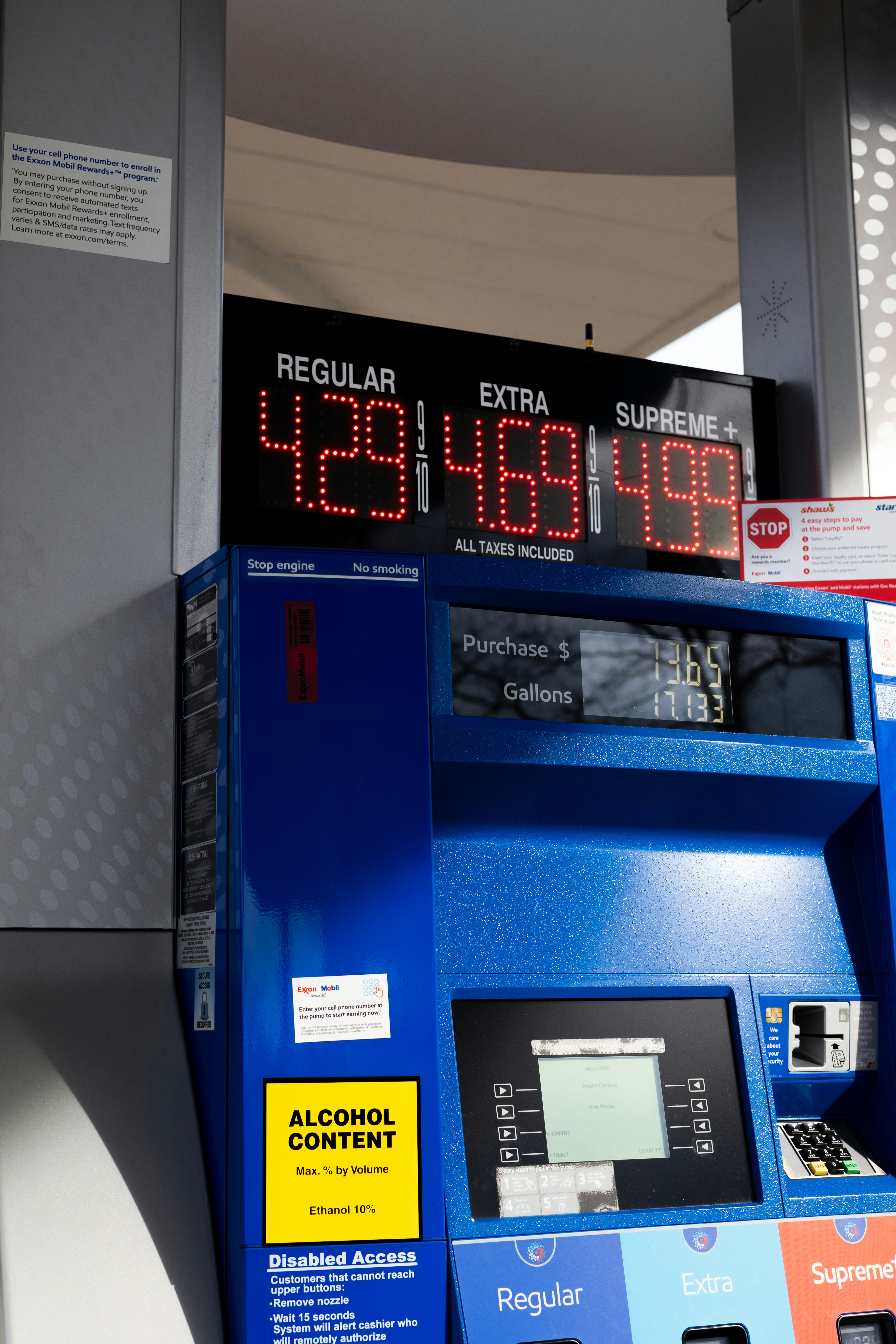
At 1300 GMT on Friday, Brent crude futures had risen $1.71, or 1.5%, to $114.99 a barrel, according to the reported market snapshot. Earlier in the session, the contract reached $115.16, its highest level since May 4. These figures describe prices and changes at that specific time; they are not current quotations. The move placed Brent near a level last seen in early May, underscoring how renewed geopolitical risk had quickly altered trading conditions for the global benchmark.
U.S. West Texas Intermediate (WTI), the other major benchmark, also advanced during the same period. It gained $1.80, or 1.8%, to $101.27 a barrel by 1300 GMT. WTI’s percentage increase was greater than Brent’s, although its quoted price remained lower. Taken together, the simultaneous rises in the two contracts indicated a broad reaction across crude markets, rather than a change limited to one benchmark. The snapshot captured a sharp upward move as traders weighed the possibility that regional tensions could affect the availability and movement of oil.
Renewed concern about supply disruption was the central catalyst for the rally. Attacks in the region and a spill in the United Arab Emirates added to uncertainty about whether production, infrastructure, or transport routes might be interrupted. In oil markets, even the prospect of constrained supply can prompt buyers and traders to reassess risk, particularly when events unfold in a strategically important producing region. The reported gains therefore reflected concern about potential disruption, not confirmation that supplies had already been lost. With Brent briefly touching $115.16 and both benchmarks higher at the stated time, the Friday snapshot showed how quickly geopolitical developments can revive supply fears and push crude prices upward.
Brent crude reaching a more-than-five-month high marks a notable shift in the market’s assessment of near-term oil risks. During trading, the benchmark crossed the $115-per-barrel threshold before retreating and settling back at the reported level. The distinction between the intraday peak and the eventual settlement matters: a brief move above a round-number threshold signals intense buying pressure at that moment, but does not, by itself, prove that prices have entered a sustained upward trend. Traders and analysts typically look for follow-through across later sessions, alongside evidence that physical supply has tightened or demand expectations have strengthened.
Brent and West Texas Intermediate, or WTI, are the two most closely watched crude-oil benchmarks. Brent is associated primarily with seaborne crude from the North Sea and is widely used to price oil traded internationally, making it especially relevant to global shipping and supply disruptions. WTI is a US light, sweet crude benchmark, with its pricing shaped more directly by North American production, storage and pipeline conditions. Their prices often move in the same direction, yet differences in crude quality, location and transport can produce a changing spread between them.
Benchmark prices are not simply records of oil already delivered; they also incorporate expectations about future availability and consumption. When attacks, infrastructure damage or shipping risks threaten supply, buyers may pay more to secure barrels or hedge against shortages. At the same time, forecasts for economic activity, refinery demand and production influence the other side of the balance. A sharp rise in Brent therefore indicates that market participants are assigning greater weight to supply risks relative to expected demand, though the price can reverse if disruptions prove limited or supply adjusts. The milestone is significant as a gauge of changing expectations, not as standalone confirmation of a lasting market direction.
Reports of Houthi attacks in Saudi Arabia have added a fresh source of uncertainty to an already unsettled oil market. Available information does not establish the full scale or consequences of the reported incidents, so their significance lies partly in what remains unclear. Traders are watching for further details while weighing whether the events signal a broader period of heightened risk. In a region central to global energy production and transport, even limited or poorly defined incidents can draw attention to the vulnerability of supply chains. The reports have therefore contributed to concern about the security environment, rather than providing a confirmed measure of disrupted output or infrastructure.
Saudi Arabia’s role in oil production means that market participants routinely assess regional security developments for possible implications beyond the immediate location of an incident. The attacks do not, on the information available, establish that oil facilities, pipelines, ports, or shipping routes were struck or damaged. However, the possibility that future incidents could affect energy infrastructure or movement through important regional routes can enter traders’ risk calculations. That distinction matters: markets can respond to the prospect of disruption before any physical interruption is confirmed. Uncertainty about targets, effects, or whether incidents will recur may therefore be enough to increase attention to supply risk.
For oil prices, the key issue is not only what has happened, but whether the reports point to a more persistent threat. If further attacks were to occur, or if additional information suggested exposure for energy assets or transport links, concerns about reliable regional flows could intensify. Conversely, clearer information indicating limited consequences could ease some of that pressure. Until the picture is clearer, traders may account for a wider range of possible outcomes, including disruptions that have not been reported. This cautious reassessment helps explain why security developments can affect sentiment even without verified production losses. The episode underscores how uncertainty itself can become a factor in pricing global oil supply.
UAE authorities have reported an oil spill, adding a separate development to a news cycle already shaped by concerns over regional attacks and the security of energy supplies. The announcement draws attention because oil markets can respond not only to confirmed interruptions, but also to information that raises questions about the reliability of infrastructure and the movement of crude. In a tense market, even a report of an incident may prompt traders and buyers to assess whether it signals a broader operational concern. That attention does not establish that supply has been lost or that existing flows have been disrupted.
A spill and a production outage are distinct events, and the available report does not connect the incident to any reduction in UAE output. Oil may be released without a facility stopping operations, while any effect on production depends on circumstances that have not been provided. For that reason, the report should be treated as a risk signal rather than proof of a measurable supply shortfall. The distinction matters in price coverage: heightened concern can influence expectations and market sentiment, but confirmed losses require evidence about operational impact, which the report does not supply.
Key details remain unspecified: the source gives no location for the spill, no estimate of its size, no explanation of its cause, and no information about whether it affected output. Without those facts, readers cannot determine whether the incident was contained, whether it involved infrastructure linked to production, or whether any barrels were unavailable to the market. Those questions should remain open rather than be answered through inference. The reported spill therefore adds uncertainty to the broader supply-security discussion, while its actual significance cannot be assessed from the information cited. But until details emerge, any claim of production losses or disruption would go beyond what has been reported.
Oil prices can respond quickly to reports of conflict because traders assess not only current production but also the possibility that future supply may be disrupted. Regional attacks can raise questions about the safety and continuity of oil fields, processing facilities, pipelines, terminals, and export operations. Even when no major asset is confirmed offline, uncertainty about whether activity could be interrupted changes the outlook traders use when valuing crude. The greater the perceived chance of a disruption, and the larger its potential scale, the more likely buyers are to pay a premium for prompt or future supplies.
Risks also extend beyond production sites. Crude must be transported from producing areas to refineries and other buyers, often by tanker through routes that may be strategically important. Threats to vessels, ports, or access through key waterways can increase shipping costs, delay deliveries, or lead companies to reroute cargoes. Those possibilities can tighten expectations for available supply even before any shipment is actually lost. Market participants therefore monitor both physical infrastructure and the logistics needed to move oil reliably across borders.
Prices may rise before a measurable shortage appears because oil markets reflect anticipated conditions as well as barrels already removed from circulation. Traders adjust bids, offers, and risk premiums as they revise estimates of the likelihood, duration, and reach of a possible interruption. If the threat later fades or flows remain steady, some of that premium may recede; if disruption becomes concrete, the market may respond more substantially. In this case, reports of regional attacks and a UAE spill intensified concern about potential exposure across the supply chain. They do not, by themselves, establish that global oil supply had already been materially reduced. Distinguishing heightened risk from confirmed losses is essential when interpreting a sharp price move: the market may be pricing what could happen, rather than documenting a shortage that has already occurred.
Brent crude rose 1.5% to $114.99, while West Texas Intermediate (WTI) advanced 1.8% to $101.27 in the reported market snapshot. Both major oil benchmarks moved higher, reflecting a session in which prices responded to renewed supply concerns. WTI recorded the larger percentage gain on this occasion, although the difference between the daily moves was modest. The figures describe a particular point in time and should be read as a snapshot rather than evidence of a durable change in market structure.
Brent and WTI are widely followed reference prices, but they do not represent identical barrels delivered under identical conditions. Brent is associated primarily with seaborne crude traded in the Atlantic Basin and is commonly used to price oil in international markets. WTI reflects inland U.S. crude, with delivery centered on Cushing, Oklahoma. Differences in crude quality, including density and sulfur content, can influence how refiners value each grade. Contract specifications and delivery arrangements also help shape the prices buyers and sellers are willing to accept.
Transportation and local market conditions can widen or narrow the gap between the benchmarks. Pipeline capacity, storage availability, shipping costs, export access, and disruptions to infrastructure affect how readily crude can move from producing regions to refineries and ports. Regional supply and demand also matter: refinery activity, inventories, production levels, and buying needs may influence Brent and WTI differently at a given time. These factors can contribute to distinct price levels even when the benchmarks rise or fall together. Although WTI’s percentage increase exceeded Brent’s in this session, a single day’s performance does not establish a lasting shift in their relationship. Assessing that relationship requires observing prices over time and considering the market conditions influencing both crude streams.
Market participants are likely to focus first on whether attacks continue, widen geographically, or affect additional energy assets. The frequency and location of incidents can shape perceptions of risk even when no immediate loss of production is reported. Conversely, a pause in attacks, or clear evidence that incidents remain contained, could reduce concern about further disruption. These developments are indicators to monitor, rather than a basis for assuming that supply will be interrupted or that prices will follow a particular path.
Authorities’ updates on the reported UAE spill will also matter. Traders will look for information about its source, scale, location, and potential environmental or operational consequences, as well as any response from relevant companies and agencies. Further clarification that the spill is limited and does not affect infrastructure or shipping could help temper market anxiety. Uncertainty may persist, however, if details remain scarce or assessments point to a connection with vulnerable facilities or transport routes.
Another key question is whether any production sites, storage facilities, ports, pipelines, or export flows have been affected. Confirmed damage, operational restrictions, or delays to cargoes would provide tangible evidence of disruption and could sustain upward pressure on prices. Reports indicating that facilities remain operational and shipments continue as scheduled may instead ease the risk premium built into the market. Participants will also weigh these developments against broader supply-and-demand conditions, including inventories, output levels, consumption trends, and other sources of supply. Strong underlying demand or tight inventories could amplify geopolitical concerns; ample supply or weaker consumption could offset them. Together, these signals will help determine whether the recent rally retains support or gives back some gains, without guaranteeing either outcome.
A sustained rise in crude oil prices can affect households and businesses well beyond commodity markets. Because oil is used directly in petrol and diesel and as an input across supply chains, higher benchmark costs may eventually appear in pump prices, freight charges, aviation expenses and the cost of moving goods. Producers may also face more expensive fuel, feedstocks, packaging or other petroleum-based materials, potentially raising operating costs. Whether these pressures are passed on to customers depends on competitive conditions and companies’ ability to absorb them through margins or offset them with efficiencies.
The timing and scale of any change vary considerably between countries. Taxes can account for a large share of retail fuel prices, cushioning the effect of crude movements in some markets while amplifying it in others. Refining margins, local supply conditions, exchange rates and government subsidies also matter: a weaker currency can make imported oil more costly, while pricing rules or periodic adjustments may delay changes at the pump. Transport contracts and production budgets may likewise respond only when they are renewed, so impacts can emerge gradually rather than immediately.
A short-lived market spike is therefore different from a durable increase in consumer costs. If prices retreat quickly, retailers and businesses may have little reason to make lasting adjustments, although some costs can still reflect temporary volatility. A prolonged rise is more likely to feed through into transport fares, delivery charges and prices for goods whose production or distribution is energy-intensive. Energy-importing economies and fuel-intensive industries may be more exposed, particularly where alternatives are limited. The reported Friday move alone does not establish that households or businesses have already experienced such effects; the broader consequences would depend on how long higher prices persist and how local markets transmit them.
Brent crude touched $115.16, its highest level since May 4, as reports of regional incidents heightened concern over the security of oil supplies. At the reported time, both Brent and West Texas Intermediate (WTI) were trading higher. The move reflected a market responding to the possibility that attacks or infrastructure disruptions could affect production, transport, or confidence in the reliability of exports.
That response should be distinguished from evidence of confirmed supply losses. Concern about Houthi attacks in Saudi Arabia and a separately reported oil spill in the United Arab Emirates added uncertainty, but the reported price increase alone does not establish that either event had reduced the amount of crude reaching buyers. Markets can incorporate a risk premium when traders anticipate possible disruption, even while the scale, duration, and operational consequences of an incident remain unclear. Further verified information is therefore essential to assess whether anxiety is translating into a material change in physical flows.
For now, the price action signals heightened sensitivity to developments across the region rather than a settled account of lost supply. The next reports will need to clarify the security situation, the nature and extent of the UAE spill, and whether oil production, export infrastructure, or shipping has actually been affected. In conclusion, the direction of crude prices will depend on what those updates reveal. If risks prove contained and energy flows continue normally, some of the immediate concern may ease; evidence of sustained disruption could reinforce upward pressure. Until facts on the ground become clearer, volatility is likely to remain tied to incoming information, with traders weighing confirmed changes in supply more heavily than speculation alone.
Source: https://www.reuters.com

The PakSoil News Team is a dedicated group of journalists, editors, and analysts committed to delivering accurate, timely, and balanced news coverage. From politics and business to culture and community, we bring you stories that matter — verified, unbiased, and written with integrity.